
Do telephone calls make you anxious?
Do you feel nervous when the phone rings? You might be one of the growing number of people who suffer from telephobia - the fear, or anxiety surrounding, making or receiving phone calls.
Phone calls are much less frequent than they used to be, so perhaps this is part of the reason.
Take a look at this article with me, and we can look at the causes and possible solutions to this problem.
Don’t be afraid of the phone!
Jamie
-
00:00:00 - Hello, how are you? You doing well, I hope so. Today I'm talking about telephobia.
00:00:05 - What is telephobia? Well, the hint is that first part, Tele related to telephones. Phobia, of course, means fear. So it's a fear of phone calls, something that troubles a lot of young people and not so young people nowadays.
00:00:23 - OK, head over to Psychology Today and we'll read through it together. OK, click the link in the description and I'll see you there.
00:00:31 - Hello. Hope you're doing OK. Thank you for joining me yet again. It's Monday yet again. Today I'm going to be talking about something called telephobia.
00:00:46 - What is telephobia? Well, we're looking at the Psychology Today article, so it is psychology related. Phobia, of course, is related to the fear of something that might give you a hint. The tally here we're talking about is related to telephones.
00:01:08 - So click the link in the description and we'll read through this article together. The headline is Do telephone calls make you anxious? You're not alone.
00:01:23 - And just underneath the heading, the subheading, it says, are you afraid to pick up a ringing phone or call someone back? Here is relief. Here are the key points.
00:01:34 - Telephobia is a fear of talking on the phone, making a call or listening to voicemail. And it's not new.
00:01:43 - Well, I would imagine it's been around since the beginning of telephones. People always have phobias to something, don't they?
00:01:54 - The next key point: prevalent with Gen Z? Gen Z, feel like I should say as an English person, and millennials. Telephobia affects boomers too. Baby boomers.
00:02:02 - Telephobia is growing. But there are ways to take control.
00:02:09 - There's a picture here of a lady holding a phone, an old fashioned corded telephone. I didn't quite have that when I was growing up. I was just in the era of the wireless phones, cordless phones.
00:02:25 - But I've still used some corded ones. They seem very old fashioned now, doesn't it?
00:02:32 - OK, let me read through a bit and now we'll talk about it as I go.
00:02:35 - We're all busy and have trouble keeping up with calls and voicemails, but a phenomenon called telephobia shifts phone call anxiety to a much higher order of magnitude, so it's a much bigger problem.
00:02:56 - We're familiar with phobias of heights, spiders, crowded rooms, airplanes and so on. But fear of phones. You may have never heard of it, but it's real and it's growing and growing.
00:03:07 - So heights. Yeah, I can understand that. If you fall, you might die. Spiders, they can be dangerous. Right? Crowded rooms. I really feel actually the room itself is not a problem. I sometimes have issue if I'm in a supermarket and the aisle is a bit narrow and you can't get through the space.
00:03:30 - I don't know if that's not the same as a crowded room, surely. And I don't know if it's claustrophobia, but I just don't like the idea that it's hard to escape, hard to be free. I don't like being at the mercy of a crowd, I guess you could say.
00:03:39 - Anyway, back to the article.
00:03:47 - Well considered, relatively new, relegated to millennials and Gen Zers, digital natives who prefer texting to talking, Telephobia has actually existed for decades and was first written about in the early 90s, years before cell phones or smartphones.
00:04:01 - One UK study found 40% of baby boomers and 70% of millennials reported anxiety when the phone rings. And a 2024 study of more than 300 students revealed 9% experienced moderate to severe telephobia and 33% experienced mild telephobia.
00:04:34 - I didn't realise you could have a mild phobia. I thought a phobia was yeah I guess some people can have more severe cases.
00:04:50 - Let's see if the phone rings, how do I feel? Well, I do know that a lot of times, you know, there are scam callers. We've all heard about that.
00:05:01 - I'm not sure if anyone's had those robotic calls as well where it's some kind of recorded message. So there is some genuine worry about being annoyed like that, but I think it's a it's an era difference.
00:05:18 - So 30 years ago, 40 years ago, the phone was the only way to get information about things, doctor's appointments, whatever, unless you got a letter, but that would take a lot longer. So it's the quickest way to get information.
00:05:37 - So you needed to rely on it. Nowadays we do have the Internet, and we can message by email or text, and so people have less opportunity to get used to it. That's my theory on this.
00:05:49 - I'll keep reading through the article, see what it says. Common causes and triggers of telephobia. Generally, people with telephobia fear what someone else, the person calling or leaving a voicemail or picking up one's call, might think of them. They anticipate judgement.
00:06:14 - Some experience telephobia because of traumatic past phone experiences, but most with telephobia are simply apprehensive. They won't know what to say, how to ask for what they need, or that they'll be found wanting in some way.
00:06:30 - So it's the fear of unknown. It seems like no one likes to be judged and similar to those who experience stage fright, those with telephobia fear they'll mess up, feel embarrassed or worse.
00:06:44 - OK, those kind of things make sense to me. I guess I would say that with experience, so maybe most people feel like that in the beginning, but with experience you get used to it.
00:07:03 - Again, if it's not something that people have to deal with multiple times a day, it is a bit tough to deal with it. I have heard of people almost being offended if you try to call them out of the blue.
00:07:17 - I think I can understand that to an extent, but a phone call is a direct way to communicate with someone and you can communicate faster than text quite a lot. So a video call, you know, we have that luxury nowadays.
00:07:28 - Back to the article, compounding the problem to making the problem worse is that almost no one has heard of telephobia, so it remains a quiet, shameful little or big secret. This only compounds anxiety and isolation, contributing to people thinking they're the only one with this problem.
00:07:58 - You know, I do appreciate when there is a label to help people understand what they're dealing with. One thing that I also feel quite strongly is that labeling someone can be a problem because it limits them. It forces them into a box, puts a label on them obviously, and that can stay with them for years and it becomes part of their identity.
00:08:27 - So for me, something quite interesting is the effectiveness, the utility of labels.
00:08:33 - It's an interesting discussion. We all know that nowadays people talk a lot more about certain conditions that they have, whether it's something like ADHD, autism, etcetera. And it just seems strange to me that so many more people have these conditions compared to before.
00:08:56 - And you might say, well, we didn't know about it, but it just seems like it's a huge trend for people to have these kind of have these kind of diagnosis.
00:09:09 - OK, let me read this last paragraph in the section at this extreme. Telephobia can lead to relationship problems, impaired occupational functioning, social isolation and more.
00:09:24 - Imagine if you never answered your phone, reviewed voicemails, or made phone calls for, say, just three months. It could create unlimited personal and professional havoc.
00:09:39 - Indeed, if your job requires you to answer phones, then it could be a difficult situation. But I would say that if you're at work, you kind of have no choice, and I think it forces you to get used to it.
00:09:56 - Now, with other phobias that I've seen before, there is this therapy called exposure therapy, and that's where you get used to something little by little.
00:10:06 - So I guess this is what I'm suggesting might be good for this phobia as well.
00:10:13 - The article continues and gives some advice. It says tips and strategies to overcome telephobia. I'll just read through this few tips.
00:10:25 - The first one, start low, go slow. So this is saying to call family, friends or family you're comfortable talking with. And then you gradually work up to higher stakes and more important, more risky people.
00:10:41 - The people themselves are not risky, but calling them could be more things can go wrong indeed.
00:10:56 - So next one, give yourself a break, let yourself try just a one minute call to begin increasing as you become more comfortable.
00:11:07 - Next says use a schedule just like office hours. Agree with yourself to answer phone calls during certain hours.
00:11:17 - So this used to be a thing where if you would call someone late at night then it would be considered rude. I don't think we have to answer the phone if it's what's the word. I was going to say uncivilised hours, but yeah, impolite times of day, so 10:00 PM at night. Of course, too late.
00:11:37 - The next point says keep a list in front of you with lines like wow or I need a minute to think about that. This gives you time to take a breath and relax before responding.
00:11:48 - I guess it's good to have that in front of you. I wonder if for some people their mind just goes blank.
00:11:56 - So there's three more. Ask yourself what's the worst that could happen? This reminds me of one of my favourite drinks, Doctor Pepper. There used to be a commercial. I wonder if it's still running. What's the worst that could happen? It's a good question to ask yourself.
00:12:16 - Role play is the next point. Again, ask a friend or family member to practice to pretend and the last one says work off a script.
00:12:23 - Even a few talking points increase your confidence. You can get these very easily with things like AI nowadays. You could ask it to produce a script for you, so that could be a useful thing.
00:12:40 - Let me just read the last paragraph and we'll call it a day.
00:12:43 - Most people with telephobia use these ideas and significantly increase their comfort and ease with phone communication. But if telephobia drastically impacts your personal and or professional lives and these tips don't help, reach out for assistance. Phobia treatments work and you can recover. Changing your relationship with your phone calls can change your life.
00:13:10 - Yes, there's a lot to think about there, particularly for people who do have some anxiety around phone calls. I myself am OK with them, but I think it's also because of, yeah, I just got used to them.
00:13:19 - But if anyone does have issues with that, if you're listening, please try and go through some of the tips. It might help you.
00:13:34 - All right, an interesting article, Telephobia, it's a new word for me. And I'll be asking people if they have any issues with it and I can discuss with them that I found some interesting research and information about it.
00:13:51 - All right. Well, next I'll be with you on Wednesday. Hope you have a lovely rest of your day and I'll see you next time. Thank you, take care. Bye bye.
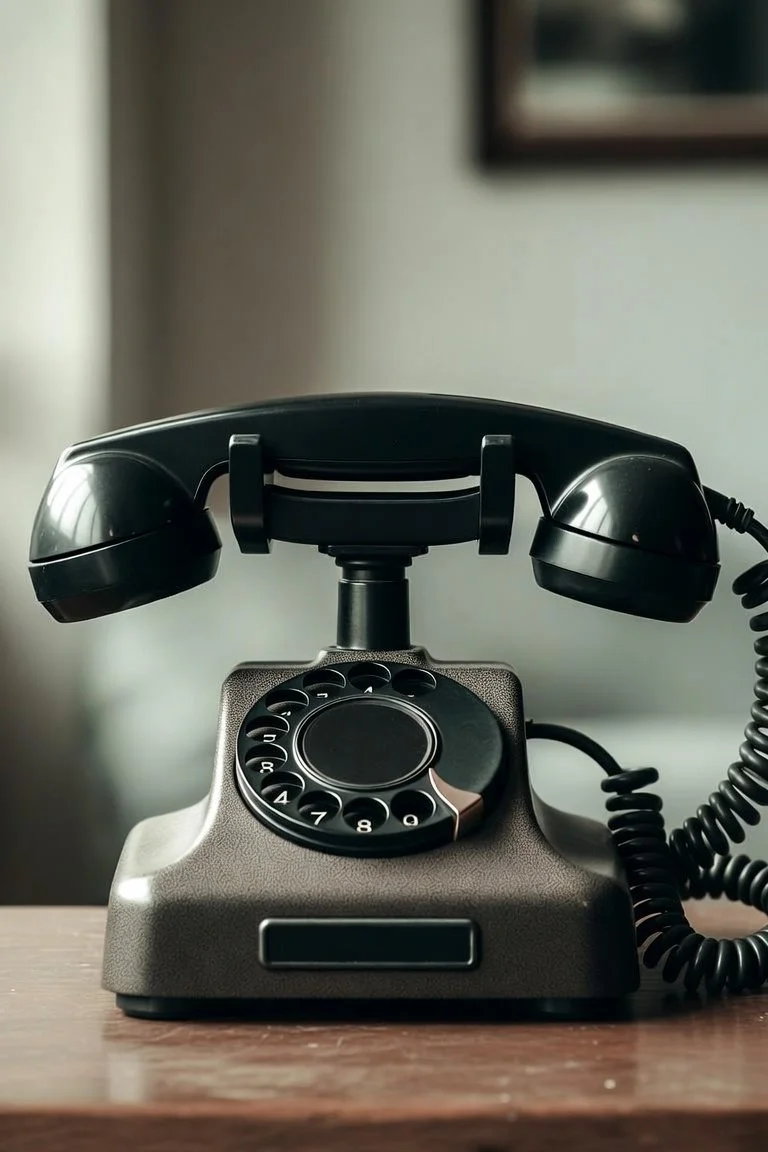
Does this make you feel anxoius?